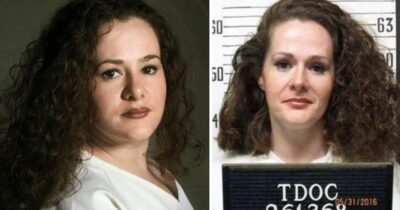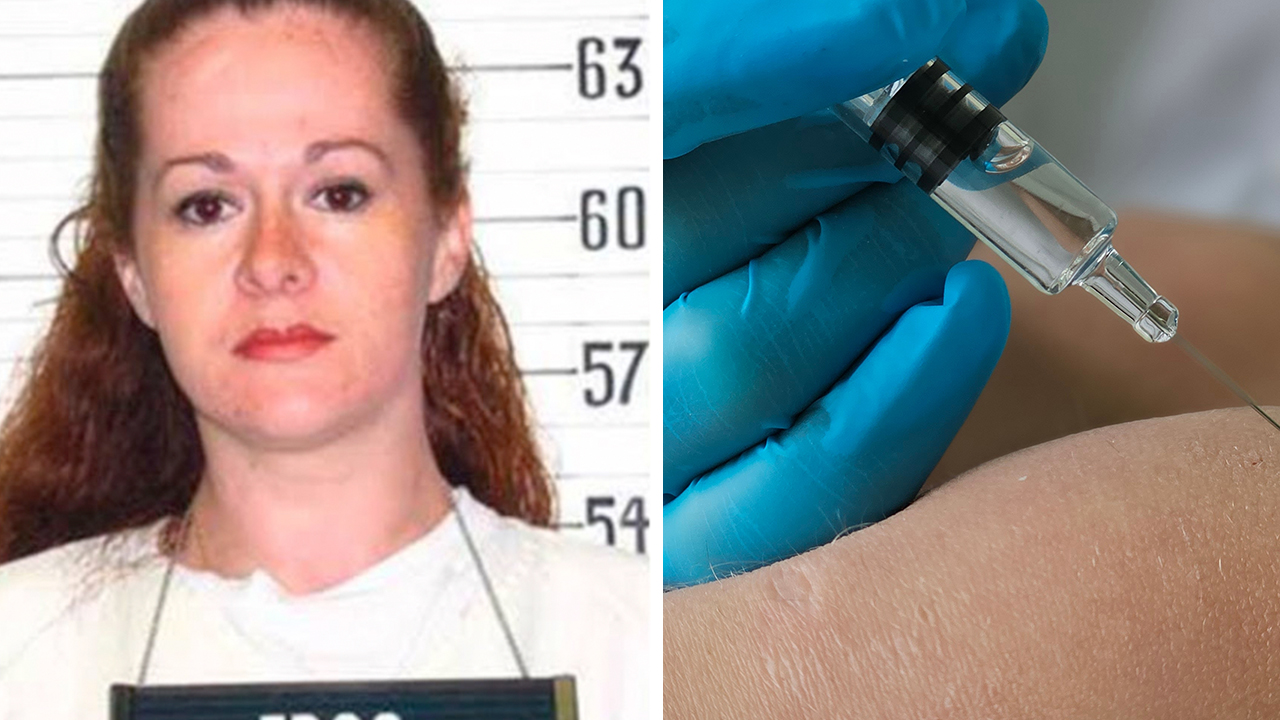
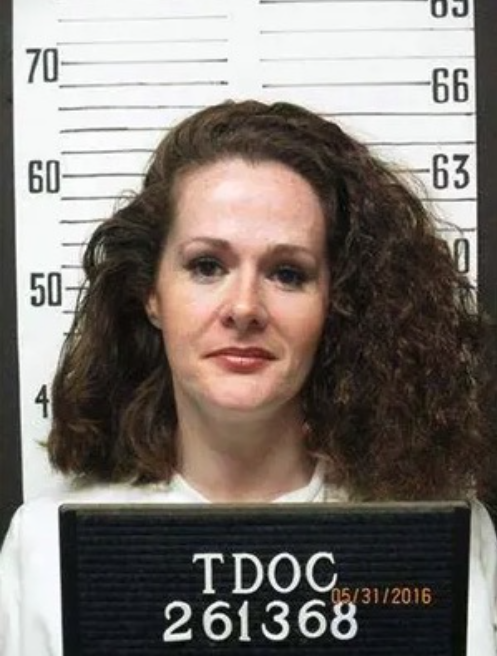
Further details are emerging from the failed execution of Christa Pike last week, including one eerie instruction she gave as she reportedly attempted to assist her would-be executioners in ending her life.
Pike’s execution was initially scheduled for 10:00am local time in Nashville, Tennessee at Riverbend Maximum Security Institution last Wednesday, September 30.
The execution was halted an hour before it was to commence as the Sixth Circuit Court of Appeals wished to review ongoing legal challenges raised by Pike’s defense team.
The stay lasted for approximately eight hours. The State of Tennessee immediately appealed the delay, and the U.S. Supreme Court ultimately overturned the lower court’s stay, clearing the way for the execution to proceed later that evening.
However, the execution failed after Pike was administered two full doses of the lethal injection drug pentobarbital. Instead of dying, she remained alive, audibly snoring, and breathing for over an hour, prompting officials to ultimately call off the attempt and rush her to a hospital, where she was placed on a ventilator.
That Pike’s sentence was to finally be carried out after 30 years (she was convicted back in 1995) was controversial to some as it was.
Her defense team repeatedly argued that Pike was herself a victim of extreme trauma and sexual abuse at a young age before she tortured and murdered Colleen Slemmer.
Tennessee governor Bill Lee refused to intervene in the days leading up to Pike’s scheduled date of execution, while her appeals to various courts – the Supreme Court included – failed one after the other, exhausting her legal options.
Yet just 90 minutes before Pike’s execution was to get underway, a federal appeals court issued a stay, citing a need for more time to consider new arguments in her case.
Just after 5:45 p.m. on the same day, the U.S. Supreme Court lifted the stay, paving the way for the execution to be carried out.
In the aftermath of the botched execution, the Department of Corrections has insisted it followed its lethal injection procedures to the letter. Pike’s attorney, Randy Spivey, however, claims otherwise.
Speaking to the New York Times, he said that state protocol outlines that the the process should take 10 minutes. Instead, he claims it took an hour.
“I counted at least seven needles used in her left arm alone, one of which appeared to be bent when it was pulled from her arm after an unsuccessful attempt,” Spivey said.
Moreover, he told the newspaper that the authorities had been warned that attempting to end Pike’s life via lethal injection was a bad idea, as Pike has small veins and a blood disorder.
He went on to describe how Pike herself was trying to assist her executioner in finding a viable injection spot.
“Over and over again she said, ‘Please try up on my shoulder higher, please try here, please try here,’” Spivey told the New York Times.
Dr. Joel Zivot, who worked closely with Pike’s defense team, has shared his thoughts on the matter and explained what might have gone wrong. Her team had issued warnings ahead of the execution, one of which concerned Pike’s thrombocytosis, a blood-clotting disorder.
He suggested that clotting may have occurred soon after the needles were inserted, preventing the lethal drugs from properly reaching the veins.
According to the doctor, the pressure caused by the clotting may have caused the targeted veins to rupture.
“She very likely has a significant burn on one or both arms from the pentobarbital that I expect went into the tissues,” he said, appearing on TMZ’s YouTube series, In The Know.
Following the failed execution, Pike was taken to an off-site medical facility. Now, doctors are still dealing with the consequences as she remains unconscious in a heavily guarded hospital room.
Read more: