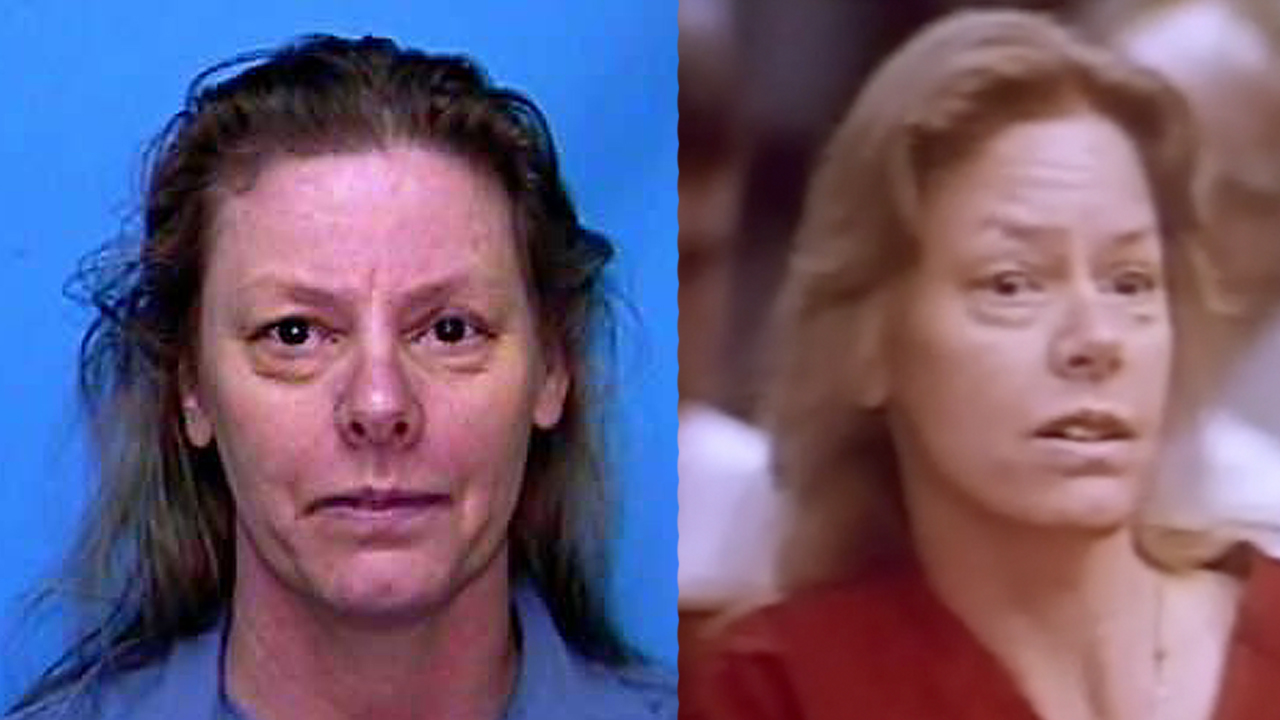
Aileen Wuornos spent more than a decade waiting to die for murdering six men, but seven days “before the end,” the notorious serial killer wrote one final letter to the childhood friend who never abandoned her.
Only months after her arrest on Jan. 9, 1991, Aileen Wuornos wrote to Dawn Botkins from jail, reconnecting with a friend she had known as a teenager and offering an ominous hint about the murder accusations surrounding her.
It was the first of hundreds of letters later published in “Dear Dawn: Aileen Wuornos in Her Own Words.”
“I’d love to tell you what’s going on. Here, me in jail and the case. But I would Jeopardize a very severe matter (or) matters if I did,” the “Damsel of Death” wrote in the April 1 letter, later adding, “As for what really went down. The world will be surprised to learn at trial time.”
The world would soon learn plenty about Aileen Wuornos.
‘Hitchhiking and hookin’ 24/7’
By her own admission, the Michigan-born Wuornos was “hitchhiking and hookin’ 24/7” along Florida’s highways, where she killed seven men between 1989 and 1990, People reports.
As investigators closed in, they turned to Wuornos’ girlfriend, Tyria Moore, who had left Florida and returned to Pennsylvania. Police persuaded Moore to cooperate, bringing her back to Florida and using recorded phone calls between the women to get Wuornos talking about the killings until she eventually confessed.
‘I have hate crawling through my system’
By January 1992, Wuornos was on trial for the first-degree murder of Richard Mallory, whom she maintained she had shot in self-defense after he attacked her. The jury found her guilty and unanimously recommended the death penalty, and Wuornos later pleaded guilty or no contest in five other murder cases, leaving her with six death sentences.
“I killed those men, robbed them as cold as ice. And I’d do it again, too,” Wuornos said, according to CNN. “There’s no chance in keeping me alive or anything, because I’d kill again. I have hate crawling through my system.”
Although she also confessed to killing Peter Siems, she was never charged in his death because his body was never recovered.
‘Highway Hooker’ meets Lizzie Borden
More than three decades later, Wuornos is back in the spotlight as notorious cases continue to fuel fascination around women associated with extreme violence.
On Sept. 30, convicted killer Christa Pike survived Tennessee’s attempt to execute her by lethal injection, once again putting a notorious female killer at the center of national attention.
Wuornos has resurfaced for a very different reason.
Netflix has brought her into Monster: The Lizzie Borden Story, where Sarah Paulson portrays Wuornos alongside Borden, the Massachusetts woman accused of killing her father and stepmother with an axe in 1892 – a century before “Highway Hooker” left a trail of dead men along Florida’s highways.
Series co-creator Ryan Murphy said he “always wanted to do something about Aileen Wuornos,” using her fictional appearance to contrast perceptions of female violence in Borden’s era with those of today – and the “monsters” behind the killings.
“So, we are kind of doing this fantasia of women vs. the system,” Murphy told the Hollywood Reporter. “And it’s not what they did; it’s the question of: What made them do it? Why did they do it, if they did it? That’s what the show is about.”
But long before Wuornos became a character in someone else’s story, she spent years putting her own thoughts on paper.
Letters from inside the cell
The April 1991 letter to Botkins was only the start. As Wuornos moved from jail to death row, the childhood friends continued writing, with their correspondence touching on everything from religion and other prisoners to the far more mundane realities of life behind bars.
In 1992, after she had been sentenced to death, Wuornos complained to Botkins about prison food that “looks like dog vomit,” while also writing about fellow inmates, including convicted killer Judi Buenoano, the “Black Widow,” who was executed by electric chair at the Florida State Prison in 1998.
The letters continued throughout Wuornos’ years on death row, but by October 2002, there was little time left for either woman to write.
‘Love ya buddy’
Seven days before her scheduled execution, Wuornos sent Botkins one final letter.
“So again – Would like to ‘THANK YOU’ for helping me through it all!” she told Botkins. “And from the ‘DEBTS OF MY SOUL’…sis ‘THANK YOU FOR EVERYTHING!’ ‘THANK YOU SOOOO MUUUUCH!’ ‘SOOOO SOOOO VERY MUUUUCH,’ she penned, adding, “Will Love ya buddy. ‘FOREVER – MAN!’”
Wuornos continued: “And with that good thought ‘SOOOO MEEEAANNT.’ ‘SOOOOO FOR REAL!’ I’ll close here and find a way to relax a little more before the end. I’ll see ya at Starke, and again someday on the other side,” she wrote, referring to the city of Starke, Florida, 11 miles from Florida State Prison where she lived on death row.
“Love ya buddy and take good care ‘My FRiEND.’ You’ll be ‘FOREVER REMEMBERED BY ME.’ Love Aileen,” she wrote to her friend.
She continued: “P.S. I’d like to also ‘THANK YOUR FAMILY’ for all the support and understanding they gave in our friendship too, and how they stood by it. Was definitely cool, and, brave. Thanks a million Dawn!”
“And you too, you guys in the family. Will Love ya. ‘FOR EVER!’” she added.
‘I’ll be back’
After telling witnesses at her execution that she’ll “be back,” Wuornos died by lethal injection at Florida State Prison on Oct. 9, 2002, but Botkins’ role in her story did not end with the final letter.
The childhood friend who had corresponded with Wuornos throughout her years behind bars visited her the night before she died, then took her ashes back to Michigan after the execution.
There, the story that had restarted with a letter more than a decade earlier ended among the walnut trees Botkins had been planting for her friend.
“She loved walnut trees,” Botkins told The Ledger. “I’ve been planting walnut trees for her for a few years.”
Botkins scattered Wuornos’ ashes among those trees on her property in Tuscola County, bringing her childhood friend back to Michigan one final time.
Would you ever consider corresponding with a convicted serial killer on death row, or would that be a line you could never cross? Please let us know in the comments, then share this story to get the conversation started!
Read more: