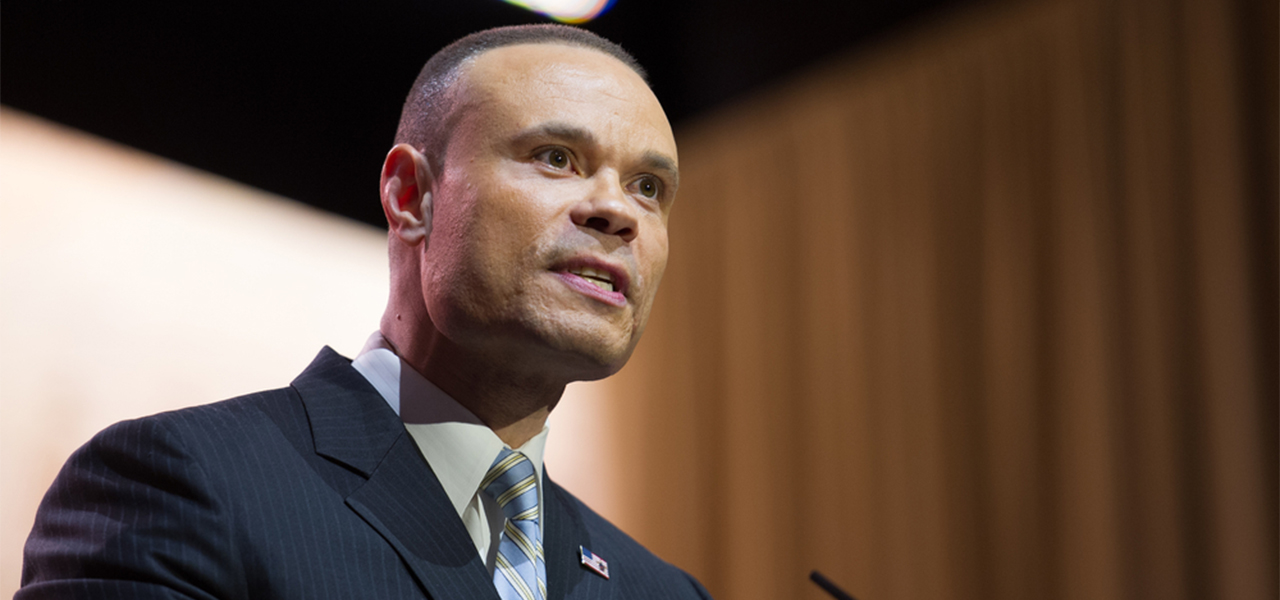
Former FBI Deputy Director Dan Bongino is urging Americans to take emergency preparedness seriously, telling households to stockpile at least three days’ worth of food, water and backup power.
Keep reading to learn more about his tips.
The warning came during an episode of The Dan Bongino Show this week, just hours after details emerged about FORTRESS, a Pentagon initiative designed to keep US military bases operating independently for at least 90 days if civilian infrastructure becomes unavailable.
Bongino’s message to listeners was direct.
“Get your stuff today. Please. Do it for your family,” he said.
He also warned that people should not assume their neighbors will have supplies to share if an emergency disrupts access to essential services.
What Dan Bongino Says Every Household Should Have Ready
Bongino used his podcast to spell out the supplies he believes families should have available before an emergency happens.
“Have yourself an emergency radio, have yourself some batteries, get yourself some emergency food, get yourself a rain collection and water filtration, some filtration tablets,” he advised.
He then explained why he believes preparing in advance is particularly important for families with children.
“The best day of your life, you don’t need them. And in 10 years, you’re like, ‘Ah, I wasted $1,000 or whatever.’ The worst day in your life is your kids looking you in the face like, ‘Hey Dad, Mom, where’s the water?’ And, ‘Well, we don’t have any.'”
Bongino also cautioned listeners against relying on other households for help.
“Your neighbors are not going to have any extra food,” he said.
The former FBI official, who also previously served in the Secret Service and the NYPD, connected his advice to the Pentagon’s FORTRESS programme.
“The Pentagon’s doing its job to keep our national security safe and make ‘Fortress America’,” he said.
“You have to make ‘Fortress my house’, ‘Fortress my apartment’.”
What Is The Pentagon’s FORTRESS Programme?
FORTRESS is a Pentagon initiative intended to ensure US military bases can continue operating for at least 90 days without depending on civilian infrastructure.
That means preparing for a scenario in which bases cannot rely on public electricity, municipal water supplies or ordinary civilian logistics networks.
Pentagon chief spokesperson Sean Parnell explained the reasoning to Fox News.
“We don’t want to rely on standard civilian municipal infrastructure to run our national defense,” he said.
The programme reportedly includes several measures designed to keep military installations functioning during major disruptions.
Among them are portable nuclear reactors, large-scale battery storage systems and independent local electricity grids that could help bases remain operational during blackouts.
The plans also involve identifying civilian factories that could switch to producing defence equipment when needed.
In addition, the Pentagon is looking at stockpiles of ammunition, fuel, critical minerals and medical supplies.
The programme is focused on maintaining military readiness if civilian systems become unavailable. However, its existence does not mean that a nationwide infrastructure collapse is expected or imminent.
What FEMA Recommends Americans Keep At Home
The advice to prepare for emergencies is not limited to Bongino’s podcast.
The Federal Emergency Management Agency (FEMA), through its Ready.gov programme, already recommends that households maintain enough supplies to manage for at least three days, with preparations ideally extending to two weeks.
Its recommendations include:
- Water: One gallon per person per day for drinking and sanitation.
- Food: A supply of non-perishable food that does not require cooking.
- Emergency communication: A battery-powered or hand-crank NOAA weather radio.
- Lighting: Flashlights and extra batteries.
- Medical supplies: A first aid kit and a seven-to-10-day supply of prescription medication.
- Sanitation: Garbage bags, wet wipes and other hygiene essentials.
- Power: Portable phone chargers and power banks.
- Shelter supplies: Dust masks, plastic sheeting and duct tape.
- Navigation: Local maps in case digital services become unavailable.
These supplies are intended to help people manage temporary disruptions, whether caused by severe weather, power outages or other emergencies.
Why Other Countries Are Also Urging Households To Prepare
The US is not the only country encouraging residents to keep emergency supplies at home.
Several governments across Europe have issued similar recommendations in recent weeks, including Sweden, Germany, Ireland, the Netherlands and France.
The UK has also updated its civil emergency guidance, recommending that households maintain three days’ worth of essential supplies in case severe weather, cyberattacks or other disruptions affect everyday services.
Japan has taken a similar approach. According to the article, the country’s disaster management minister announced that households would be formally encouraged to maintain at least three days of food, water and toilet supplies from November 2.
Although the specific guidance differs between countries, the underlying message is similar: households should be able to manage independently for a period of time if normal services are disrupted.
For governments, emergency preparedness is part of planning for a range of possible events. It does not necessarily indicate that officials expect a major crisis to happen.
Bongino’s message to listeners was ultimately straightforward.
“Panic kills. Prepare,” he said.
Share this with others who like to keep up with the latest stories and updates.
Read more: