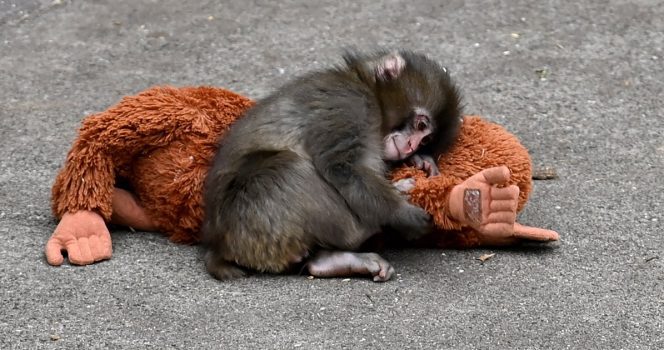
I can’t be the only one who got completely drawn into the story of Punch, the baby macaque who bonded with a stuffed toy after being abandoned by his mother.
Today, Punch continues to draw attention — especially as viewers follow his interactions with other macaques, which range from gentle to rough.
Now seven months old, experts in primate behavior are offering new insights into his heartbreaking story — including why he’s sometimes seen being “bullied” by other monkeys.
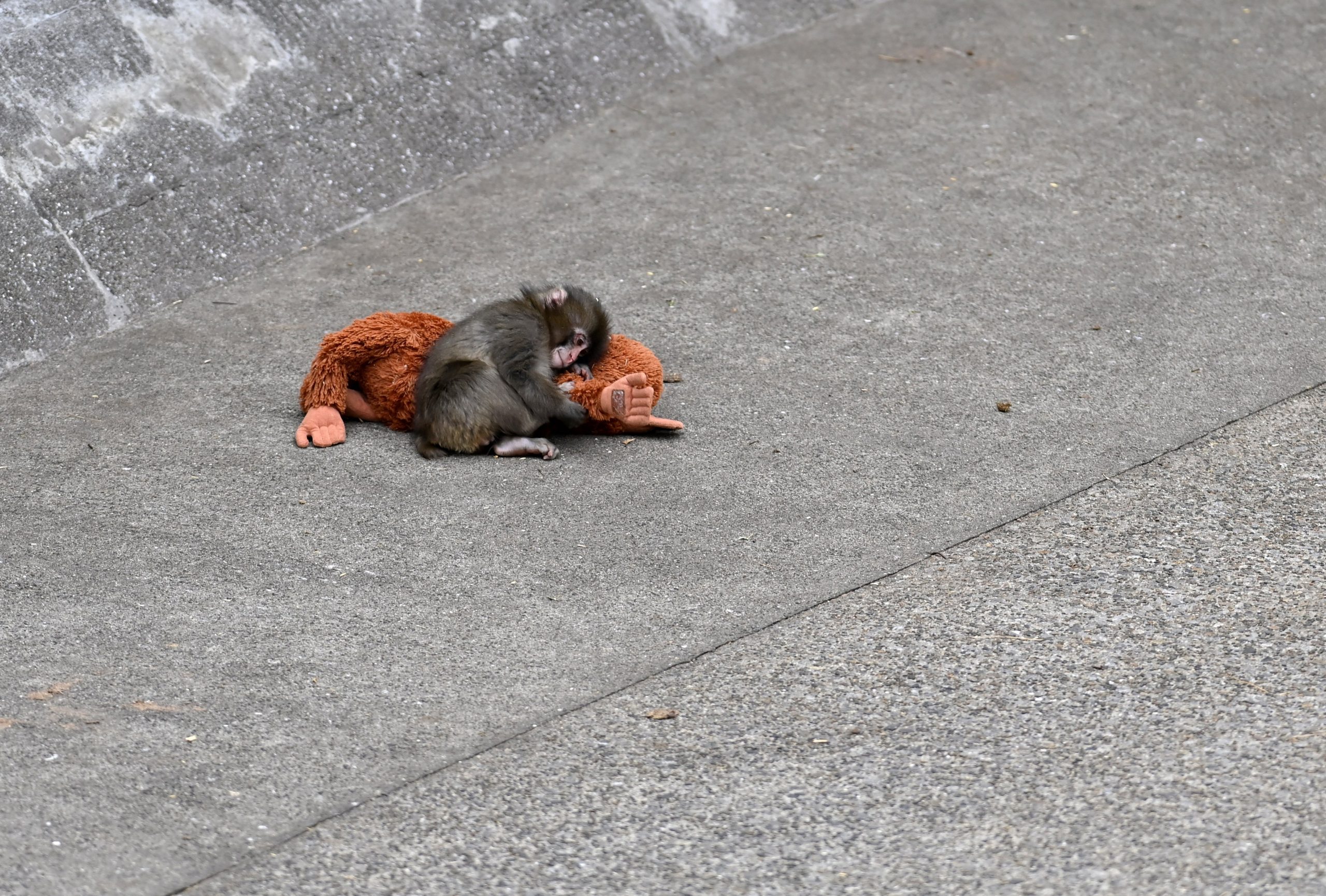
By now, many people have likely seen Punch, the baby macaque whose story has captivated the internet. The young monkey went viral after being filmed carrying and cuddling a stuffed animal nearly as big as he is inside his enclosure at Ichikawa City Zoo, east of Tokyo.
Zookeepers later revealed that the Japanese macaque had been rejected by his mother shortly after birth, in last July. With no maternal care, the infant began clinging to the plush toy, which staff describe as a kind of “surrogate mother.”
The touching footage quickly spread online, driving a surge in zoo visitors and even inspiring a parody on Saturday Night Live.
Why was Punch rejected by his mom?
According to the zookeepers in Tokyo, Punch’s mother was a first-time parent and gave birth during an extreme heatwave, two factors that can significantly increase stress.
“There is evidence that maternal investment is affected by periods of environmental or nutritional stress, where mothers may not have sufficient resources to provide for their offspring,” Zanna Clay, a developmental psychologist specializing in primatology, told Bored Panda.
“Heatwaves can be one such example.”
Jessica Mayhew, who studies primate social behavior, added that maternal care in primates is largely learned.
“Being a parent is challenging even in the best of circumstances,” she explained.
“Maternal care in primates is learned over one’s lifetime and influenced by opportunities to observe experienced mothers.”
Mayhew noted that rejection is more common in captivity, particularly among first-time mothers. She also pointed out that Japanese macaques live in strict matrilineal hierarchies, meaning Punch’s mother’s low social rank may have contributed to the rejection.
Why did Punch bond with a stuffed animal?
Baby Japanese macaques instinctively cling to their mother’s body after birth to develop muscle strength and gain a sense of security. After Punch was abandoned, keepers provided several soft items, including towels and toys.
He consistently chose a plush orangutan, which he hugs, sleeps with, and runs back to when distressed.
According to Alison Behie, this behavior has clear precedent.
“Studies done in the 1950s by Harlow found that infant monkeys removed from their mothers were more likely to cling to a cloth figure rather than a wire figure,” she told Bored Panda.
“It could be that this simulates the feeling of being on their mother. While it can in no way replace maternal care, it can provide comfort.”
Clay added that the toy’s primate-like appearance may have made it especially appealing compared to other soft objects.
Is Punch being bullied by other monkeys?
Clips showing Punch being dragged or chased by adult macaques have sparked concern online.
However, experts say the behavior — while upsetting to watch — is typical.
As mentioned, Japanese macaques live in strict matrilineal hierarchies, where higher-ranking families dominate lower-ranking ones. Even if Punch had his mother, he likely still would have encountered this kind of aggression.
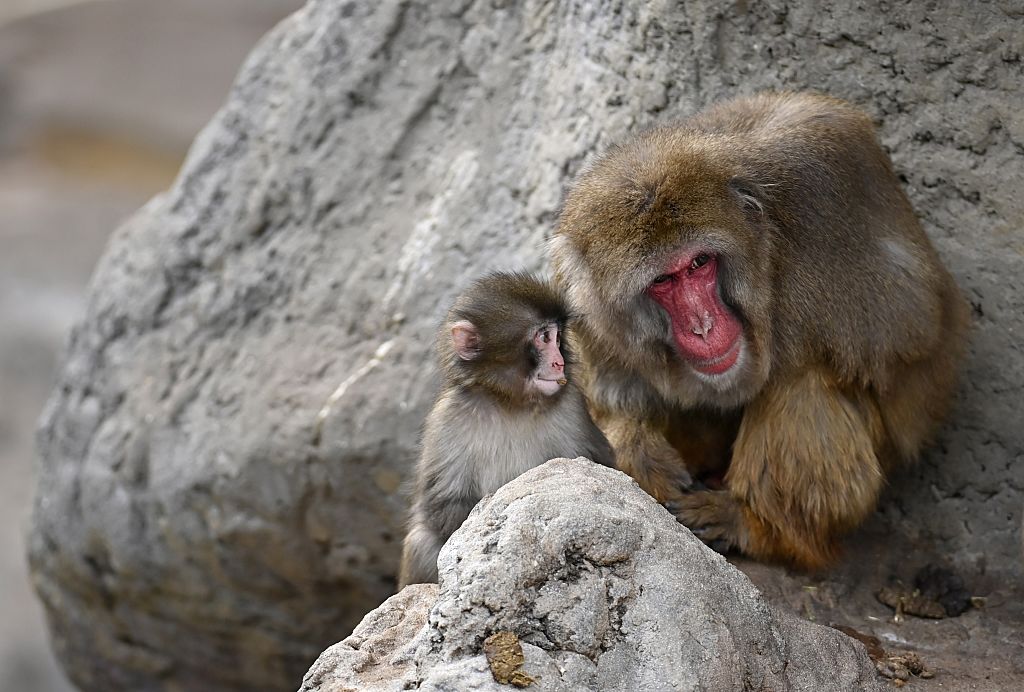
“In macaque societies, dominant females and their offspring regularly show aggression to less dominant families as a way to maintain hierarchy,” Behie explained. “This shouldn’t be seen as bullying or severe aggression.”
In other words, Punch’s lack of maternal protection leaves him vulnerable.
“Some individuals will seize on this opportunity to assert dominance through aggression, while others may intervene and show nurturing behavior,” Alison Behie said. “Like humans, monkeys respond to vulnerability in very different ways.”
Why does Punch groom his toy?
In several videos, Punch is seen grooming the stuffed animal and approaching other monkeys as if expecting them to groom him.
“Grooming is essential social glue for macaques,” Mayhew explained. “It reduces stress and helps build and repair social bonds.”
She added that while Punch is practicing normal grooming behavior, the toy cannot reciprocate—something that could slow his social development without real partners.
Behie noted that Punch is likely mimicking what he observes in other monkeys.
Will Punch eventually integrate into the group?
One of Punch’s keepers, Kosuke Shikano, described the young macaque as “mentally strong,” noting that he recovers quickly after confrontations.
Clay said maternal rejection doesn’t doom Punch’s future, though it may leave lasting social challenges.
“It is possible that another group mate may adopt him at some point, which could really help with his development,” she said. “But these monkeys are very resilient.”
Carla Litchfield, a conservation psychologist at Adelaide University, emphasized both the intelligence of Japanese macaques and their frequent use in biomedical and neuroscience research in Japan. She also noted that macaques are sometimes culled due to crop-raiding behaviors.
“This story about Punch highlights the impacts of habitat loss, climate change, zoo animal welfare, and the power of social media to connect people to animals,” Litchfield said.
She added a cautionary note about the potential downsides of online fame: “However, hopefully the millions of social media likes and attention won’t exacerbate the problem of illegal trade in infant monkeys for the exotic pet trade because everyone thinks baby monkeys are cute and would make a great pet.
“Monkeys grow up quickly—Punch will be an adult in four years—and people no longer find them cute and manageable. Monkeys belong with other monkeys. They are social beings and need to be with their own species to thrive mentally and physically.”
Litchfield also pointed out that Punch isn’t the first zoo animal to capture global attention. She compared him to Moo Deng, the young pygmy hippo in Thailand who stole hearts in 2024 with her stubborn personality and natural star quality.
For now, Punch’s journey continues — one marked by loss, resilience, and a soft toy that offered comfort when he needed it most.
READ MORE
- Rajee Narinesingh had face pumped with cement – this is her today
- Spanish PM’s three-word response to Trump’s trade threat