
He grew up in a small Indiana town, yet somehow ended up becoming the world-famous frontman of one of rock history’s most iconic bands. The journey there is almost unbelievable — especially considering the world he came from.
As a young boy, he was raised to believe women were “evil,” taught that violence at home was normal, and lived through trauma most kids could never imagine.
His father was murdered
An incredible, wide-ranging, powerhouse voice. Hailed as the greatest singer ever. One of the top-selling artists in music history. A Hall of Fame inductee.
A kid from the Midwest who pushed past the strict, closed-in “corn belt” rules he’d been raised under, determined to prove they didn’t define him.
Born in Lafayette, Indiana, this future stage legend entered the world on a February day in 1962 and was given the name William. His mother was just 16 when she gave birth to William, and his father was 20. Later, his father would be described as “a troubled and charismatic local delinquent.”
The couple split when little William was about two. His father then abducted him and allegedly abused him before vanishing from Lafayette. Later, his mother remarried Stephen L. Bailey and changed her son’s name to William Bruce Bailey.
Until he was 17, he thought Bailey was his real father. He never met his biological father as an adult; he was murdered in 1984 in Marion, Illinois.
The Bailey household was intensely religious. Our future star attended a Pentecostal church several times a week and even taught Sunday school. Looking back, he described the environment as suffocating:
”We’d have televisions one week, then my stepdad would throw them out because they were Satanic… Women were evil. Everything was evil.”
”Rejected” by his mother since he was a baby
The rock icon has said that his father was physically and emotionally abusive to him. When Barry Manilow’s song Mandy came on the radio, the young boy sang along, only to have his stepfather cuff him over the song because it was deemed “evil.”
Adding to his anger, he said his mother let the abuse happen, something he later drew on in his songwriting. In an interview with Rolling Stone, he reflected:
“I’ve been doing a lot of work and found out that I’ve had a lot of hatred for women. Basically, I’ve been rejected by my mother since I was a baby,” he said.

“She picked my stepfather over me ever since he was around and watched me get beaten by him. She stood back most of the time. Unless it got too bad, and then she’d come and hold you afterward. She wasn’t there for me.”
If home life was far from ideal, school wasn’t much better for the red-headed kid. By eighth grade, he already had a tough attitude. A former cross-country coach recalled in 1991 that, as a young and relatively unknown kid, he was bullied by classmates on the team. His teammates once taped his mouth shut and, on another occasion, shoved him into a locker because he wouldn’t stop talking about his future ambitions.
“All of us sat back and laughed about [his boasts] and said, ‘Sure, Bill, we’ve heard this before,’” the coach told the AP. “He said, ‘No, you watch, I’m going to make it.’”
His anger toward his home state ran deep; he once even compared it to a prison — and to Auschwitz. In his late teens, he was diagnosed with bipolar disorder after a psychiatrist viewed his rebellious and delinquent behavior as signs of psychosis.
Truth about his biological father
But music offered him an escape. From the age of five, he sang in the church choir and performed alongside his siblings as the Bailey Trio. William also joined the chorus and began studying piano.
His fifth-grade teacher remembered him growing up in Lafayette as “very intelligent, very personable, always had a smile. If you weren’t careful, he’d take the classroom away from you.”
But at 17, after the truth about his biological father came to light, he started heading down a troubled path. Instead of quietly rebelling, he flat-out rejected everything he’d been told was proper, normal, or acceptable.
He was arrested more than 20 times and served jail stints of up to three months. Facing the threat of habitual offender charges, he decided to move to Los Angeles in December 1982.
Legendary rock band
Once in The City of Angels, he set his sights on becoming a rock star, a dream sparked by hearing the ’70s hits of Queen, Aerosmith, and Elton John.
He started a band called AXL, and if you’re starting to put the pieces together, you might already know who we’re talking about. While performing in the band, friends suggested he go by “Axl Rose” — and the rest is rock history. He later legally adopted the name W. Axl Rose, taking the last name of his biological father.
In March 1985, Guns N’ Roses was born when Rose teamed up with guitarist Izzy Stradlin from Hollywood Rose, along with guitarist Tracii Guns, bassist Ole Beich, and drummer Rob Gardner from L.A. Guns.
After signing with Geffen Records in 1986, the lineup that would become legendary took shape: Axl Rose on vocals, Slash on lead guitar, Izzy Stradlin on rhythm guitar, Duff McKagan on bass, and Steven Adler on drums.
By 1987, Guns N’ Roses exploded onto the scene. With their tattoos, wild hair, and rebellious vibe, the rock band became an iconic splash of color.
Their debut album, Appetite for Destruction, dropped in July of that year. At first, it was a slow burn — selling around 500,000 copies in its first year — but relentless touring, grassroots buzz around the “Welcome to the Jungle” video, and the massive hit single “Sweet Child o’ Mine” catapulted the record to No. 1.
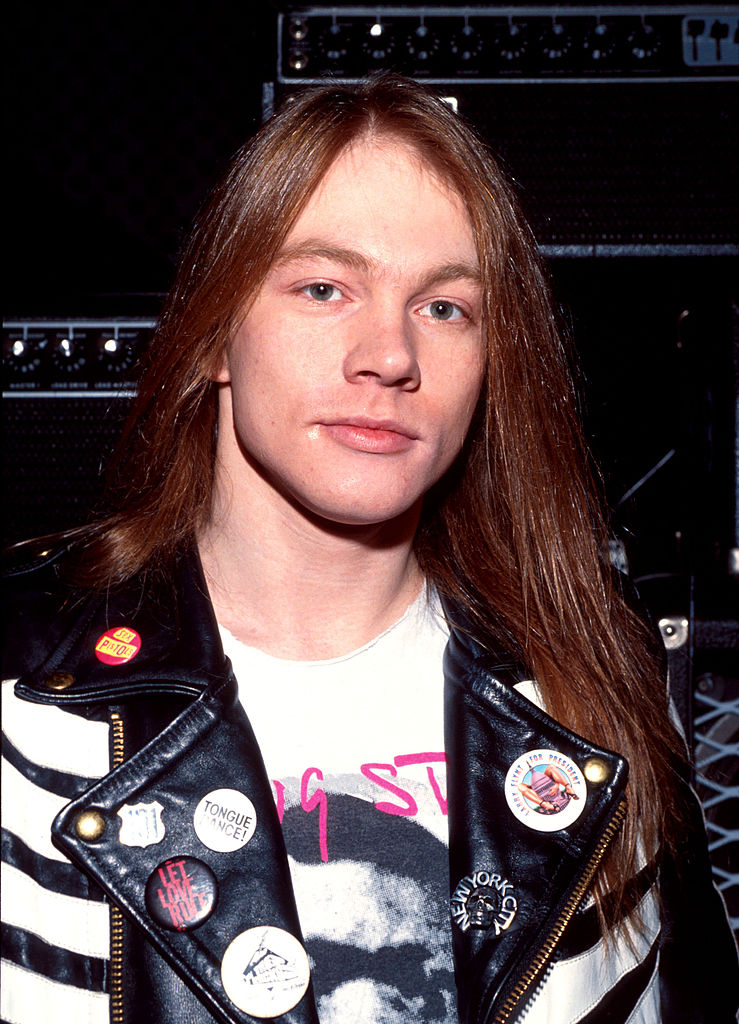
Today, Appetite for Destruction has sold over 30 million copies worldwide, including 18 million in the U.S., making it the best-selling debut album in U.S. history.
Axl’s voice, his presence, and his rebellious persona made him a figure unlike any other in rock history.
But fame didn’t come without chaos. The late ’80s and ’90s were a whirlwind of touring, internal band conflicts, and headline-grabbing controversies. Axl’s perfectionism and volatile temper earned him a reputation for being unpredictable— but also cemented his status as a rock icon who refused to compromise his art.
Through the ups and downs, including lineup changes, public feuds, lawsuits, sexual assault claims and long periods of silence, Axl never stopped evolving.
Private life
He is widely recognized as one of the greatest rock singers of all time, praised by outlets like Rolling Stone and New Musical Express. In 2012, he was inducted into the Rock and Roll Hall of Fame as a member of Guns N’ Roses — but in true Axl fashion, he declined to attend the ceremony and requested to be excluded from the museum’s displays.
Over the years, the rock icon has remained fiercely protective of his music and his legacy, eventually leading Guns N’ Roses back to stadium tours with classic albums performed in full. While he admits that years of touring have taken a toll on his legendary voice, he continues to deliver powerful shows.
Axl Rose has mostly kept his personal life private, but his relationships in the late ’80s and early ’90s were turbulent. In 1989, he said he didn’t want children because his career wouldn’t allow him time for them: “I don’t want kids because I can’t give them enough time, but if I had a son, I’d like the boy to share everything with me.”
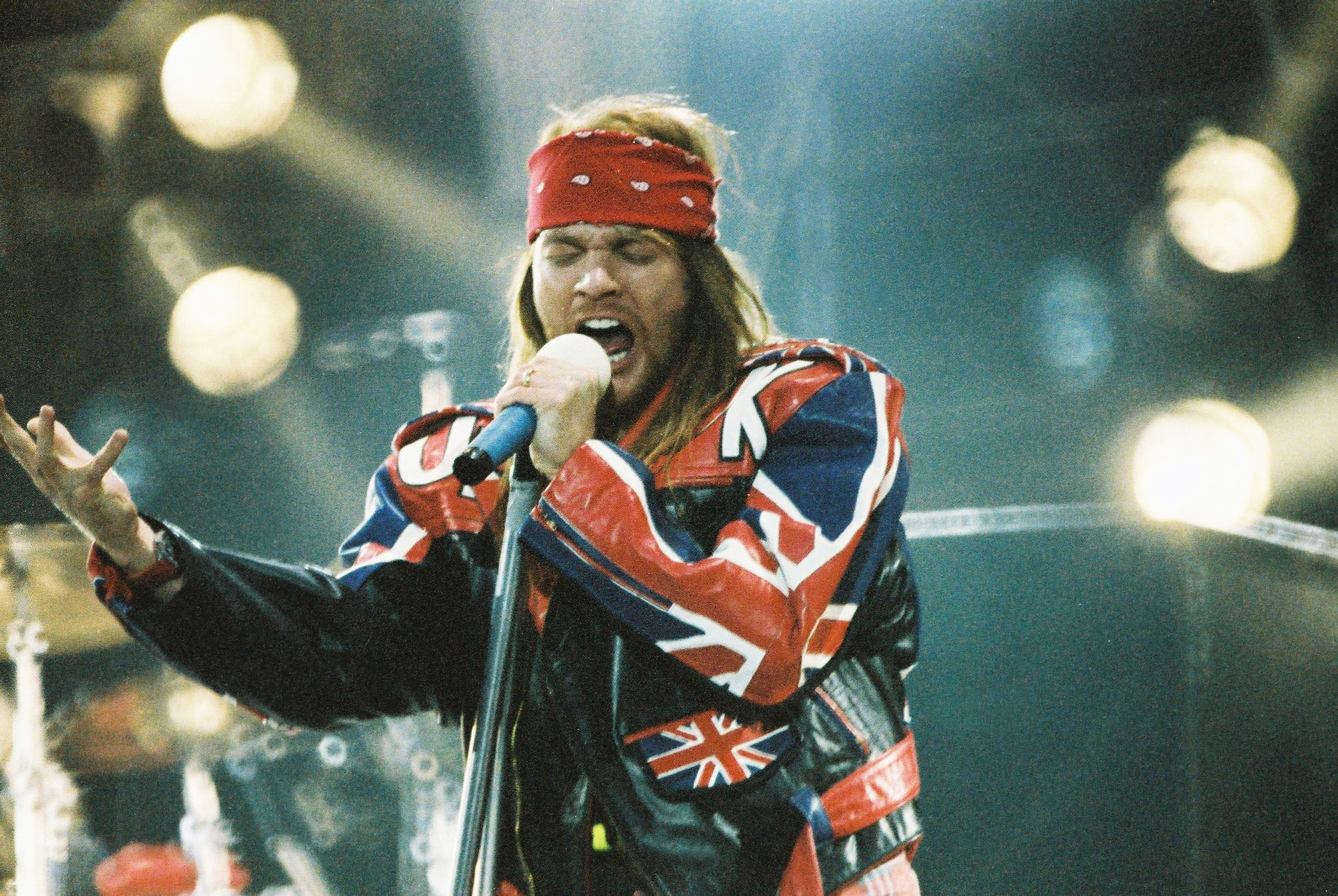
At the time, he was dating Erin Everly, whom he met in 1986. She was his first serious relationship and dreamed of a family. The couple married, but their relationship was rocky. Everly supported them financially at first, working as a model while Rose struggled as a musician. He penned “Sweet Child o’ Mine” for her, and she even starred in the song’s music video.
She later revealed that Rose mistreated her emotionally and physically, and at one point she was hospitalized.Everly became pregnant, hoping it might bring them closer. But Rose reportedly reacted with anger, kicking her out and threatening the baby. Tragically, she suffered a miscarriage at three months.
Their marriage ended shortly after, with the annulment finalized in January 1991. Everly later sued Rose over the abuse she endured, which was settled privately.
Axl Rose today
In late 2025, Rose made headlines for a dramatic onstage meltdown during a concert in Buenos Aires, showing that even today, Axl’s intensity and unpredictability remain front and center.
His live-stage meltdowns in the ’80s and ’90s became the stuff of legend. One infamous moment came in July 1991 in St. Louis, when he spotted an unauthorized fan filming the concert with a camcorder. He leapt into the crowd to stop them, then returned to the stage and snapped:
”Well, thanks to the lame-ass security, I’m going home.”
The show ended abruptly, and the frustrated audience erupted into a riot. Rose faced charges over the incident, but they were eventually dropped.
In a 1990s interview with the LA Times, Axl Rose revealed that he went through therapy to tackle his issues and destructive behavior.
“I was told that my mental circuity was all twisted . . . in terms of how I would deal with stress because of what happened to me back in Indiana,” he said. “Basically I would overload with the stress of a situation . . . by smashing whatever was around me.”
From a childhood filled with pain and loss to the heights of rock stardom, Axl Rose’s journey is certainly one of a kind. He turned trauma into music, anger into artistry, and struggles into a voice that still echoes around the world.
Love, heartbreak, fame, legal disputes and fury — he’s lived it all, proving that even the darkest beginnings can produce a star that burns brighter than anyone imagined.
READ MORE
- Pamela Anderson reveals she wants to change her name – here’s why
- The truth about adult kids who don’t visit their parents