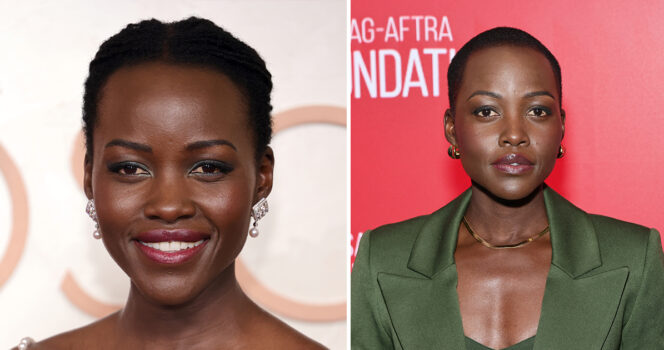
Lupita Nyong’o said uterine fibroids left her battling not only painful symptoms but a deep sense of “shame,” as she silently navigated a condition affecting millions of women worldwide.
In a March 23 interview with ABC’s Linsey Davis, the Oscar-winning actor shared that she has had as many as 77 fibroids over the years, with 50 still growing.
While continuing to appear at public events and on red carpets, the 43-year-old Mexican-born star was privately managing symptoms that took a physical and emotional toll, prompting her to speak out and encourage more open conversations about women’s health.
“I was on these red carpets and prancing about and twirling and putting on a brave face and acting like everything was okay,” Nyong’o told Davis, who revealed in 2025 that she “suffered in silence” with fibroids.
“But in my private moments, I was dealing with heavy periods and severe clotting. At one point, I had a period for over 30 days. I was pre-anemic, and I was experiencing fatigue.”
What are uterine fibroids?
Uterine fibroids are noncancerous tumors that grow in or on the uterus and are the most common benign tumors affecting females, according to the Cleveland Clinic. Although fibroids are not usually dangerous, they can cause uncomfortable or disruptive symptoms depending on their size, number, and location.
Some fibroids remain small and symptom-free, while others grow large enough to create pressure, pain, or changes in menstrual cycles. Treatment options vary widely and may include monitoring, medication, or surgical procedures depending on severity.
Signs of uterine fibroids
According to the Mayo Clinic, many people don’t realize they have fibroids until symptoms begin disrupting their everyday routine. The way fibroids affect someone often depends on their size, how many are present, and where they develop in or around the uterus.
Common symptoms include:
- Heavy menstrual bleeding or painful periods
- Longer or more frequent periods
- Pelvic pressure or pelvic pain
- Frequent urination or difficulty urinating
- Enlarged stomach area
- Constipation
- Pain during sex
Although rare, fibroids can also cause sudden intense pain if the growth loses its blood supply.
Why Nyong’o is speaking out
Nyong’o has partnered with the Foundation for Women’s Health to launch the Make Fibroids Count campaign, which raises awareness and funds research into minimally invasive and non-invasive treatments.
Her goal is to encourage more open conversations about reproductive health and help people better recognize when symptoms may require medical attention.
“As women, we are conditioned from when we’re in our adolescent years to expect pain, to expect discomfort,” the star of Black Panther said in her interview with Davis. “And we’re not taught how to observe our bodies.”
Aspirations of being a mom
Nyong’o’s experience with uterine fibroids has also shaped the way she thinks about the possibility of becoming a parent, adding another emotional layer to an already complex health journey.
“A lot of women face complications with their fertility because of fibroids. I’m no exception,” she said, fighting back her tears. “There is no guarantee right now with surgery that that actually improves a woman’s chances of being able to carry a child.”
According to the Cleveland Clinic, a hysterectomy is considered the only cure for uterine fibroids because it removes the uterus entirely, but the procedure also eliminates the ability to become pregnant.
“It’s frustrating for me,” said Nyong’o, who currently has more than 50 fibroids, one now “the size of an orange.” “It’s been a real challenge. And yes, I still fantasize about motherhood. There’s a lot that has to be in place for that to happen, and I am definitely contending with the role my fibroids are playing in challenging that.”
She added: “I cry because I desire something that I don’t know I’ll be able to have.”
‘What did I do wrong?’
During the ABC interview, Davis spoke about how many women “battle in silence.”
Nyong’o agreed, describing the emotional impact of her diagnosis.
“It looked like shame,” said the star, who won an Oscar for her performance in 12 Years a Slave. “In the beginning I thought, what did I do wrong? What didn’t I do? How did I not protect my body? How did I not serve my body that it has betrayed me in this way? I was hiding in plain sight.”
Do you think it makes a difference when celebrities speak honestly about health challenges? Share your thoughts below and pass this article along so more people know what signs to watch for.
READ MORE
- Six symptoms of bowel cancer after James Van Der Beek dies aged 48
- John Cena issues warning about signs of cancer after his heartbreaking diagnosis