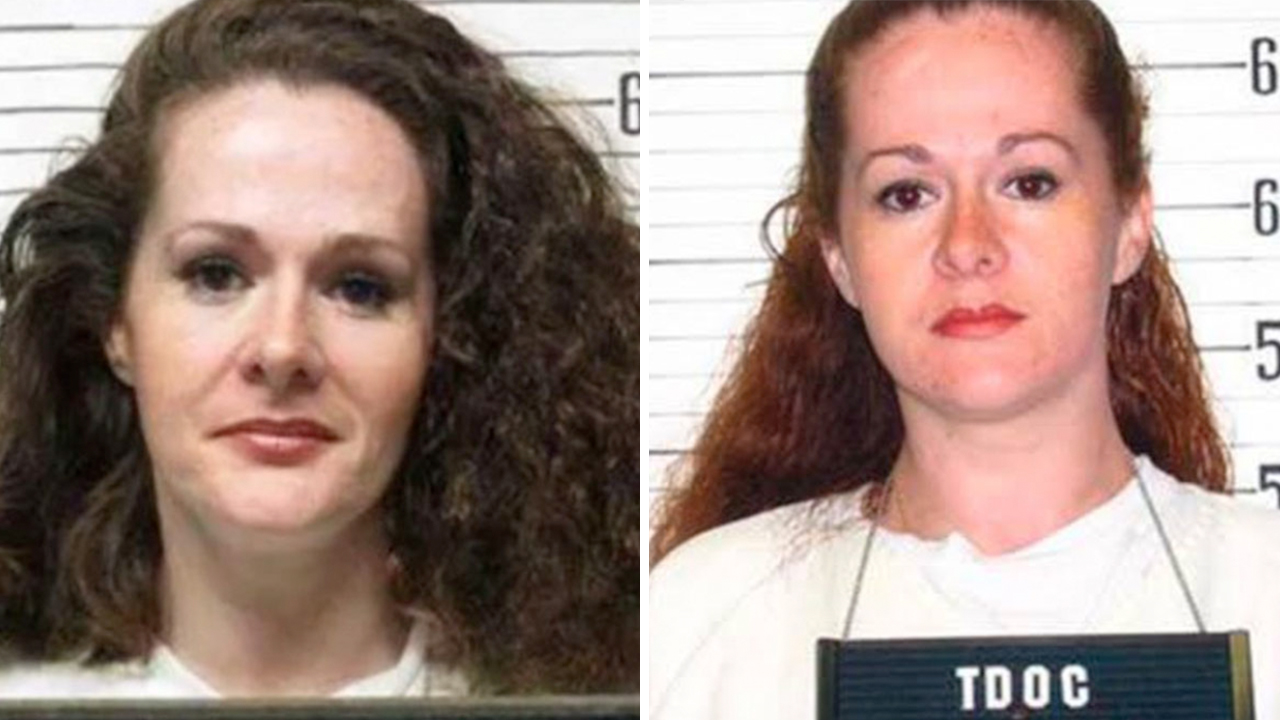
A newly released eyewitness account reveals that Christa Pike’s executioners warned a vein might have “blown” as they struggled to administer a lethal injection.
Christa Pike, 50, was scheduled to die by lethal injection at Tennessee’s Riverbend Maximum Security Institution on Sept. 30, 2026, for the brutal 1995 murder of fellow student Colleen Slemmer, whom she tortured and stabbed to death with her boyfriend when she was just 18.
One of the youngest women sentenced to death in the United States, Pike had spent decades on death row before her execution took a disastrous turn, leaving her hospitalized for 10 days and raising serious questions about Tennessee’s lethal injection procedures.
Now, a detailed account from her attorney, Randy Spivey, who witnessed the attempted execution, reveals that prison staff repeatedly struggled to establish intravenous lines and expressed concerns about whether the needles were properly positioned.
Pike helped IV team find a vein
In a sworn declaration dated Oct. 15, Spivey described how the execution team started preparing the two IV lines required under Tennessee’s protocol at approximately 6:34 p.m., when a team member “held what appeared to be a vein-finder device over Christa’s right arm.”
“IV Team Member 1 shook his head and poked Christa’s arm with his finger. He seemed to be struggling to locate a vein,” Spivey wrote in the document that was shared by WKRN Nashville.
Within minutes, Pike was “instructing the IV team about where they could find a vein,” directing them toward her upper arm as they struggled to establish access.
Once they secured the line in her right arm, the killer said, “thank you for listening to me.”
But establishing a line in her left arm proved far more difficult, with team members making repeated attempts to locate a suitable vein.
‘It’s either blood or blown’
According to Spivey, Pike was “wincing and grimacing” as they manipulated needles inside her left arm. By 6:53 p.m., one team member expressed concern that the vein “might be blown.”
The team discarded a needle after questioning whether it was long enough, with one member asking, “It’s not long enough. What is the longest you’ve got?”
Four minutes later, one of the executioners again said, “it might be blowing.”
“Member two and IV team member 3 inspected the insertion site and poked it. Both said that they ‘can’t tell’,” Spivey wrote, describing the uncertainty surrounding the placement.
Another exchange captured the team’s growing concern, with one member saying something like, “It’s either blood or blown, I need to know.”
‘Let’s regroup’
Despite briefly believing they had established a working line, the team encountered further difficulties, and one member removed a needle that Spivey said, “appeared to be severely bent.”
At 7:07 p.m., after trying to secure another IV “higher on Christa’s shoulder” and “moving the needle around a lot,” one of the team members said, “I think it’s blown,” before another suggested, “Let’s regroup.”
Minutes later, after dropping about 10 used needles into “a plastic bucket that did not clink when the needles hit it,” Pike was told they “have it.”
“Satisfied that the lines were set,” the IV team left the execution chamber at 7:24 p.m., and Pike gave her final statement, ending with “I’m at peace and ready to go.”
Snoring sounded like ‘choking’
But instead of dying, Pike was still conscious less than 10 minutes later, crying out in pain, “I feel like my arm is about to bust. It burns.”
Despite her discomfort, she continued interacting with her spiritual adviser, Mikey Noechel, and as her condition deteriorated, Spivey described her making an “agitated snoring sound” before her breathing appeared to become increasingly labored.
By 7:56 p.m., he wrote, “her snoring began to sound more like choking.”
Over the following minutes, Pike reportedly strained, flinched and moved her head while appearing to struggle for air, prompting Spivey to request that the execution be stopped, arguing that Tennessee’s “protocol does not call for a third push of pentobarbital.”
He subsequently alerted the deputy attorney general that Pike needed immediate medical attention, but it wasn’t until 8:50 p.m. that he was told an ambulance was on its way.
About 20 minutes later, Spivey learned that medical staff were performing lifesaving measures, and Pike was eventually transported to a hospital, where she spent 10 days before returning to prison.
Although she is now able to walk and talk, the long-term effects of the failed execution remain unknown.
Tennessee allows a second dose of pentobarbital if the first fails to cause death, but the protocol does not specify what executioners should do if the inmate survives both injections.
What do you think should happen to Christa Pike next? Should the state attempt another execution, or should her life be spared? Please let us know your thoughts and then share this story so we can get the conversation started!
Read more: