

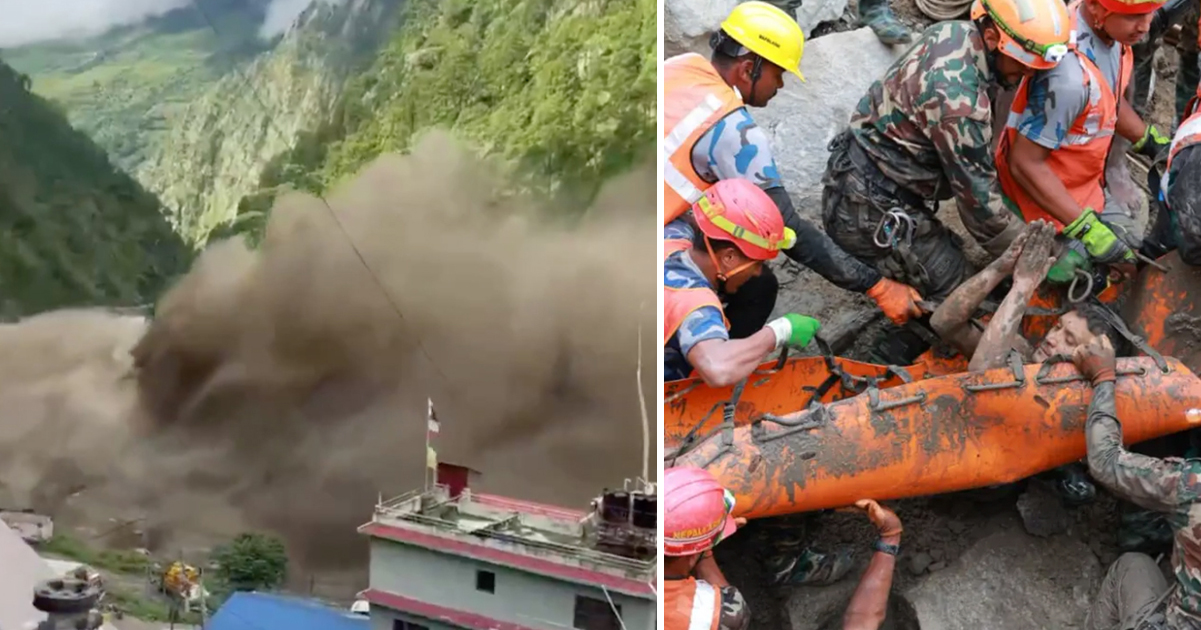
Rescue teams in Nepal have pulled two further men from the flooded hydropower tunnels submerged since dramatic floods swept over the region.
Shocking videos spread worldwide last week after a devastating rock and ice avalanche reportedly triggered a glacier collapse close to the Nepal-China border.
On Wednesday, August 26, Nepal was hit with catastrophic flooding, resulting in a mounting death toll that has already exceeded 1,000 people, with many still missing.
At the time of writing, approximately 4,350 missing tourists remain unaccounted for, with Nepali officials stating that they are prioritizing workers who are trapped inside hydropower project tunnels.
In an update today, it was revealed that two men – named by the BBC as Sanjaya Shah and Kabir Maharjan – have been pulled alive from the Trishuli 3A Hydropower Project.
Both men, reported to have injuries to their hands and legs, were airlifted to hospital in Kathmandu, Nepal’s capital. BBC say the body of a third person was found after the two men were rescued, though tragically that individual was deceased.
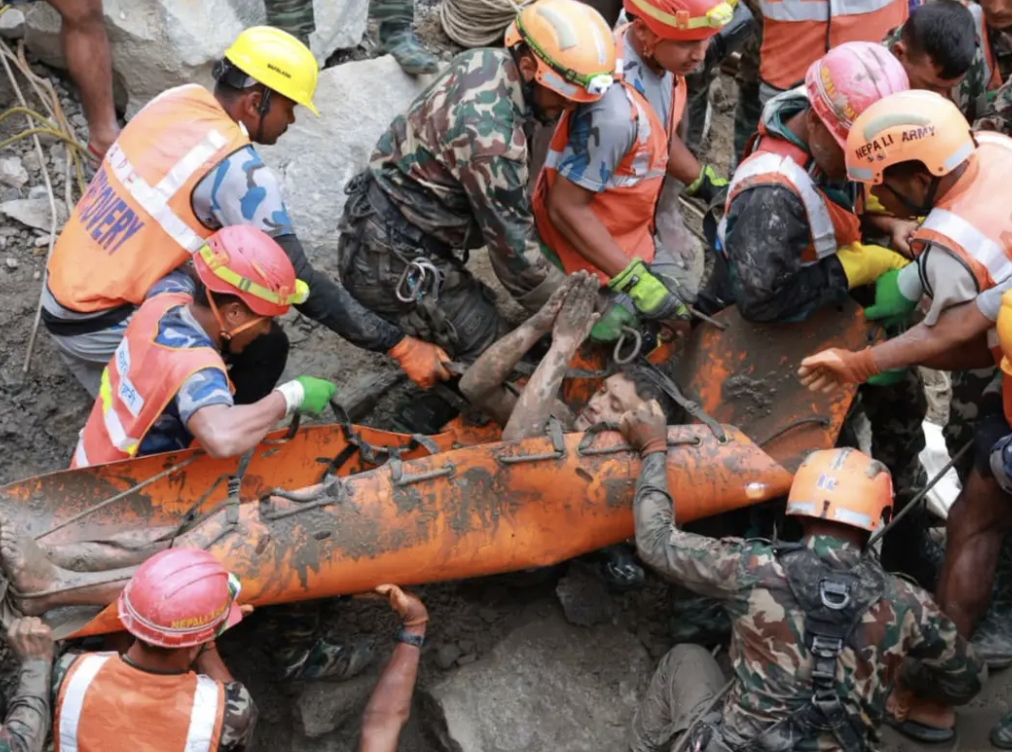
Suresh Raut, a deputy manager at the Nepal Electricity Authority, said: “The body found inside the tunnel is swollen and could not be identified.
“It appears that the person died after being caught in floodwater while trying to flee from the tunnel.”
The Daily Mail reported that a Chinese team of rescuers had ‘entered approximately 300 meters into the tunnel and conducted a search, recovering one body’ in the Upper Trishuli-1 area, the hydropower plant on the Upper Trishuli River in Nepal that was actively under construction when the flood hit.
At the Chilime Hydro tunnel, Indian rescuers encountered a blockage 100 meters in.
The update explained: “Farther inside, was buried with mud and soil. During the operation, two bodies were recovered.”
Authorities are struggling to identify the bodies of the deceased and DNA samples are being taken from those who were found ‘in a state of decomposition and no longer identifiable’.
Read more:


