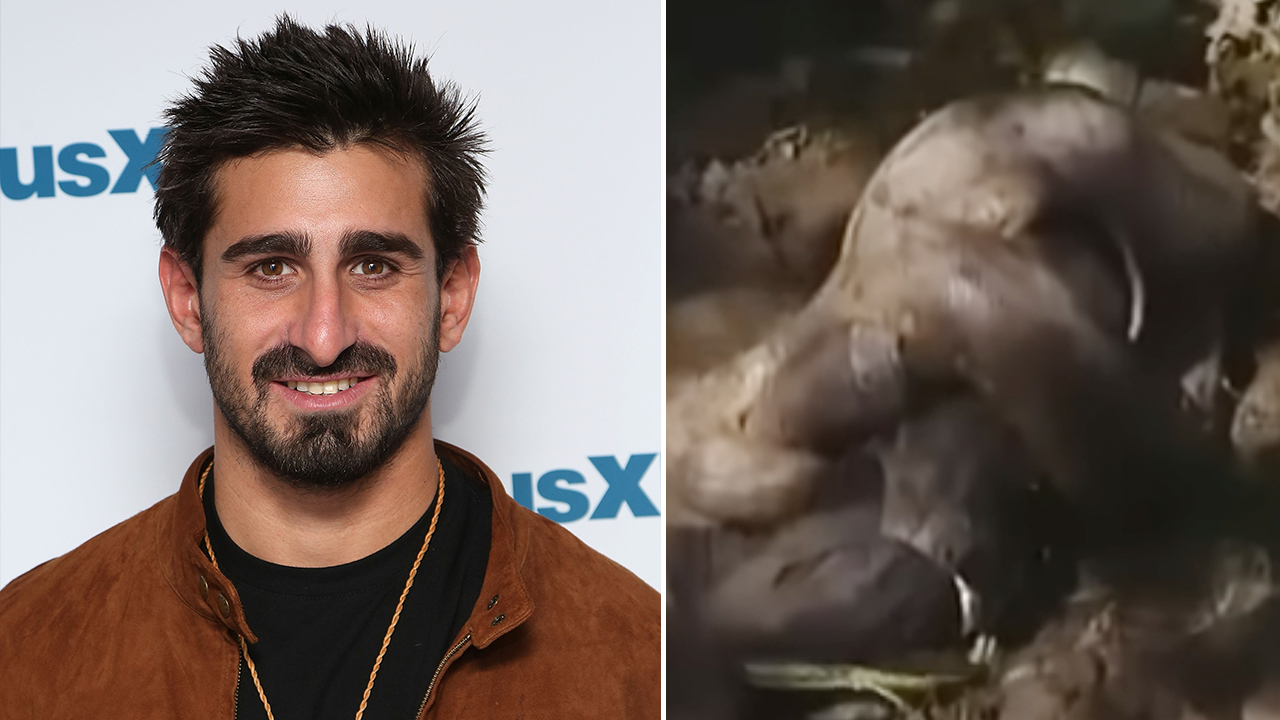
Paul Rosolie voluntarily spent more than an hour in the crushing grip of an anaconda, but the worst pain of his life came from a tiny creature that he said resembled “Trump’s hair.”
Paul Rosolie, 39, has spent much of his life working in the Amazon rainforest, where his conservation efforts have brought him dangerously close to some of the world’s most formidable wildlife.
But in 2014, he deliberately took that relationship with nature to an extreme when he agreed to become the subject of Discovery Channel’s Eaten Alive.
The stunt was designed to put Rosolie in the path of a massive anaconda and allow the snake to constrict and potentially swallow him.
‘Lungs of the Earth’
Though the idea sounded extreme, Rosolie said he was frustrated that people weren’t paying attention to the destruction caused by deforestation of the Amazon.
“It actually started with me watching rainforest get burned and getting really frustrated that people weren’t as excited about it as I was. I want to do something that’s just going to grab people’s attention,” the author of “Junglekeeper” later told Today.
Rosolie hoped the Discovery special would give him a platform to draw attention to protecting the rainforest, often described as the “lungs of the Earth,” and raise money for conservation.
‘Everything went black’
Finding the right snake was a challenge of its own.
“You have to go wading in inaccessible swamp. It’s not easy to find them. It took almost a decade of field notes just to have the resources, so we knew where to look,” Rosolie told People of the “very carefully done experiment” that took almost 60 days “in the swamp day and night.”
Once they found their almost 20-foot constricting anaconda, Rosolie – wearing a specially designed carbon-fiber suit built to withstand the snake’s crushing force – covered himself in pig’s blood to encourage the snake to strike and went toward it headfirst.
While his team monitored his vital signs and veterinarians remained nearby to ensure the anaconda was not harmed, Rosolie recalled “seeing the snake’s mouth open.”
“Everything went black,” he told Today, describing the force of the constriction as “being caught in a wave.”
And then, the carefully planned stunt eventually ran into trouble.
‘Snake was messing me up’
Part of his arm was exposed from the suit, and as the anaconda tightened around it, Rosolie feared he was about to suffer a serious injury. Rather than risk a broken bone, he called for his team to stop the encounter.
“The snake was messing me up, but there were people making sure that nothing got out of control, that neither me nor the snake got hurt,” he explained.
Getting squeezed by an anaconda would be enough to top most people’s lists of painful encounters, but Rosolie later revealed that another creature managed to beat it.
And this one was considerably smaller.
The caterpillar that beat an anaconda
During a 2023 appearance on The Joe Rogan Experience, Rosolie recalled finding a yellow caterpillar in the Amazon covered in unusual fluffy hair.
“It kind of looked like Trump’s hair,” he joked about the larva that bore a striking resemblance to the mop on President Donald Trump’s head.
Rosolie knew touching it was a bad idea, so he carefully placed the caterpillar on a leaf while attempting to transfer it into a terrarium.
Then the leaf buckled.
The caterpillar fell into his hand, and the consequences were immediate.
“I was plunged into immediate, like, electroshock, like, pain waves,” Rosolie recalled, saying the pain was “way worse than a bullet ant.”
“Whatever this caterpillar did to me f****ed me up for days. It was horrible,” he told Rogan, adding that his team examined the caterpillar, that had “Christmas tree barbs” under its fury exterior.
“I was not laughing,” he said. “Like when we get bit by a bullet ant, we’re like, oh sh**, like your day’s over. It’s funny. That’s not funny.”
What is a puss caterpillar?
During Rosolie’s conversation with Rogan, they identified the fuzzy creature as a puss caterpillar, which eventually develops into a southern flannel moth as an adult.
Rosolie said the creature he encountered was not necessarily the same species, describing it instead as “something in that family, something related to that.”
Puss caterpillars, also known as asp caterpillars, may look harmless beneath their thick coat of hair, but hidden among that fuzz are venomous spines capable of delivering an extremely painful sting.
Texas A&M AgriLife explains that contact with the hairs or spines of venomous caterpillars can release toxin into the skin, causing symptoms including intense pain, burning, swelling and blistering. One recommended treatment is to repeatedly apply and remove adhesive tape to help pull remaining hairs or spines from the skin.
What do you think of Paul Rosolie’s willingness to put himself in harm’s way to draw attention to protecting the Amazon? Please let us know your thoughts in the comments, then share this story to get the conversation started!
Read more: