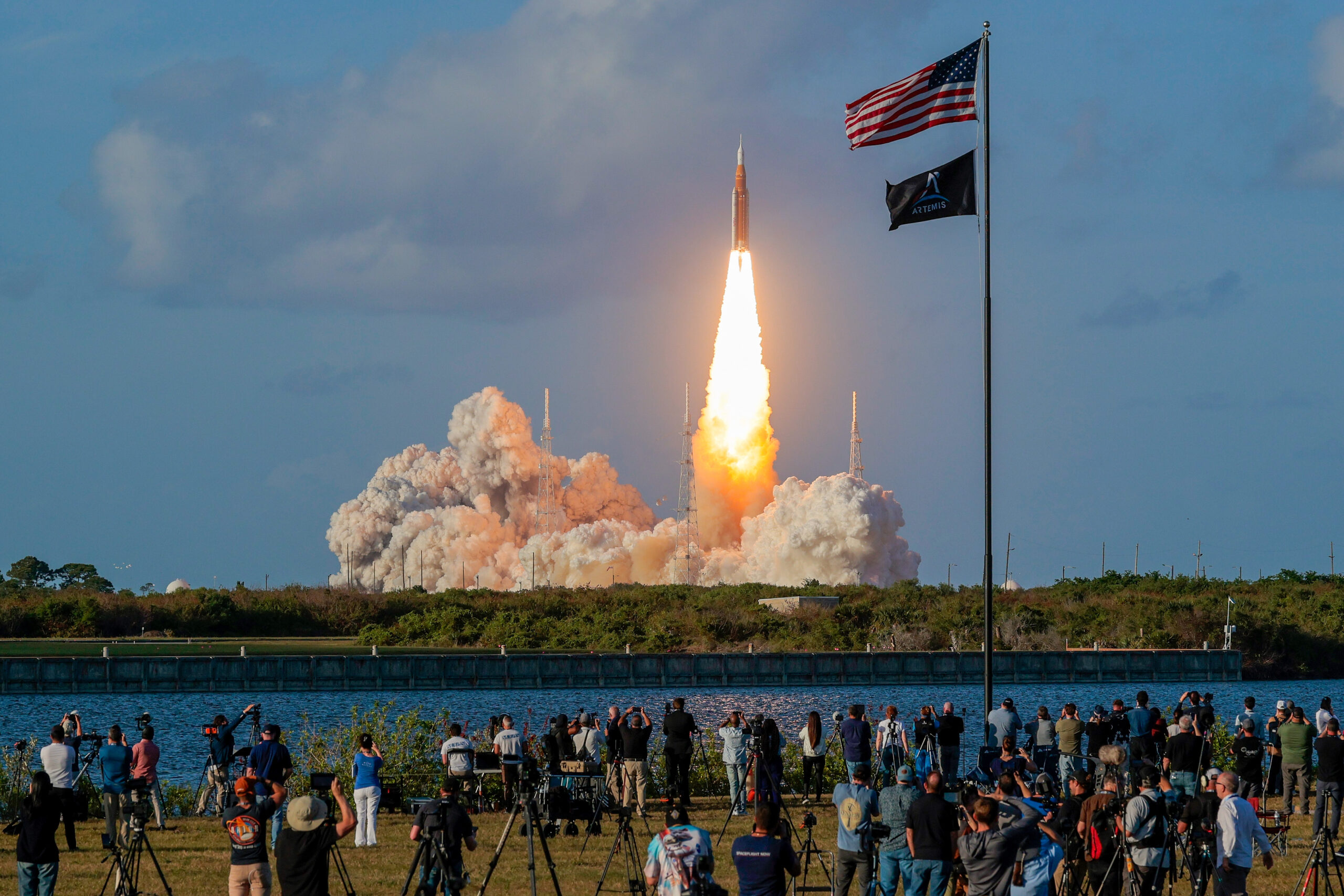
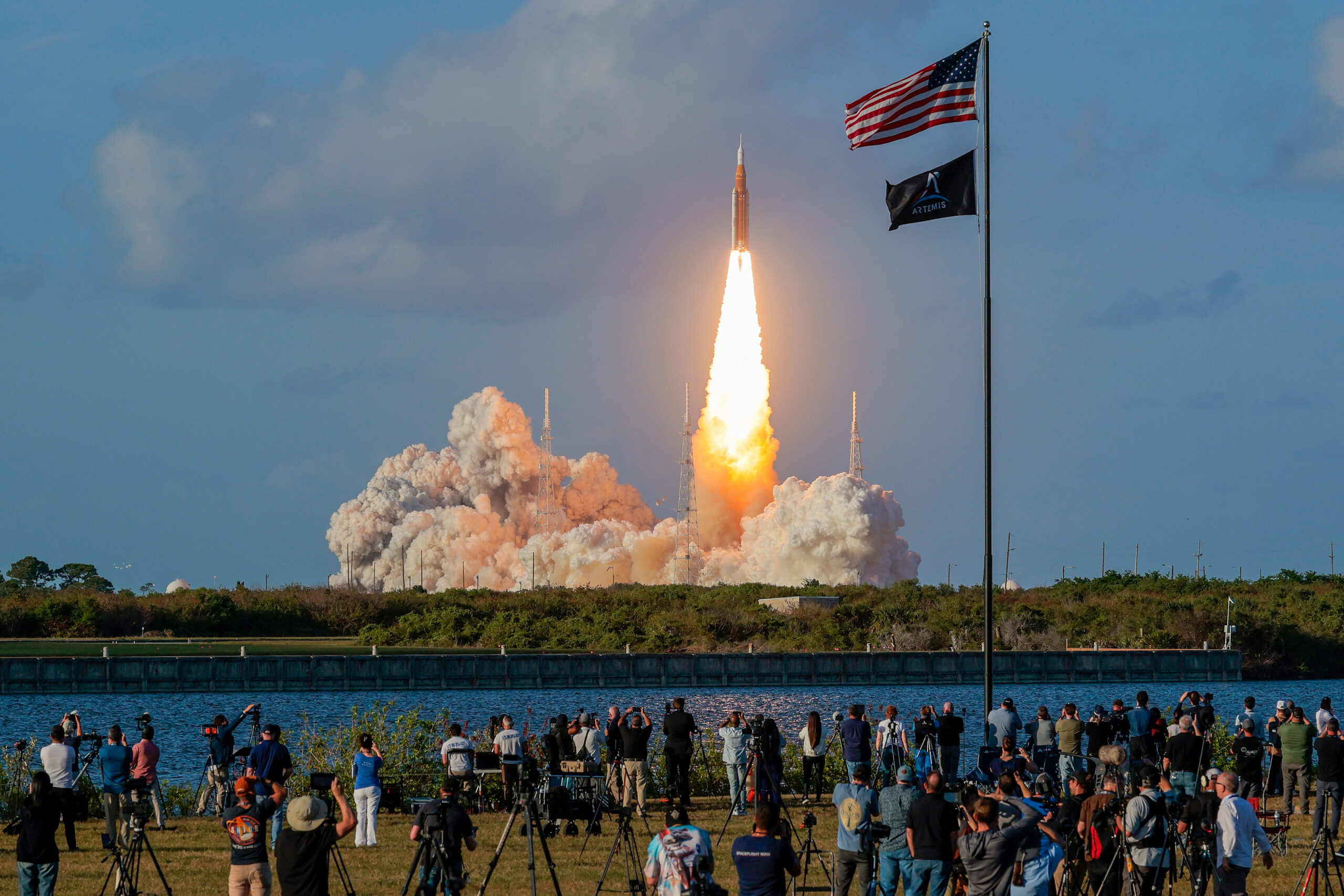
All eyes were on Kennedy Space Center yesterday as history unfolded.
The Artemis II mission successfully launched on April 1, sending the spacecraft into the Florida sky and beginning its orbit around Earth.
Orbit Earth for roughly 25 hours
Over the next ten days, Artemis and its four astronauts will head toward the Moon — though they won’t land. Instead, they’ll orbit the Moon, offering humanity perhaps the most breathtaking view yet of its mysterious far side.
”We are going for all humanity,” said mission specialist Jeremy Hansen as they launched.
Onboard the Orion capsule are NASA astronauts Reid Wiseman, Victor Glover, and Christina Koch, joined by Jeremy Hansen from the Canadian Space Agency. At its furthest point, Artemis II could take the crew about 230,000 miles from Earth — humanity’s farthest journey into space yet.
The crew will orbit Earth for roughly 25 hours before being flung toward the Moon.
However, the mission isn’t without risks. A final crucial step remains before the spacecraft can leave Earth’s orbit.
Taking a four-hour nap
The rocket blasted off Wednesday evening without a hitch (Chip Somodevilla/Getty Images), though weather concerns had raised the possibility of delays. Shortly after liftoff, the crew reported a malfunctioning toilet — luckily, mission control was able to fix it quickly.
This morning, the astronauts are taking a four-hour nap and will wake at 7:00 a.m. EDT (11:00 a.m. BST) to “prepare for the perigee raise burn,” which will lift the lowest point of Orion’s orbit before they continue their rest around 9:40 a.m. EDT.
Currently in Earth orbit, flight control teams are thoroughly checking the spacecraft’s engines, navigation, and life support systems to ensure everything is ready for deep space.
If all systems pass inspection, Orion’s main engine will fire for five minutes and 45 seconds — a single burn powerful enough to put the spacecraft on a trajectory toward the Moon.
If engineers find any issues, tonight’s “trans-lunar injection” burn could be canceled, sending Orion back to Earth instead of toward the Moon, according to the BBC.
Once near the Moon, the crew will orbit it just once, passing roughly 5,000 miles from the surface — farther from Earth than any human has ever been.
The cost of Artemis III
This mission marks the first crewed lunar journey since Apollo 17 in 1972. The astronauts will perform multiple engine burns to stay on course. At one point, when passing behind the Moon, Artemis II will be completely cut off from Earth for about 30 minutes.
How long will it take to reach the Moon? Former astronaut Joan Higginbotham estimates Orion will reach speeds of nearly 24,000 miles per hour and travel over 685,000 miles during the mission. Arrival is expected around day six. Unlike Apollo 8, Orion will not orbit the Moon multiple times or enter low-lunar orbit, but the crew will get a close-up view of the lunar far side.

NASA’s last lunar mission, Apollo 17, saw Commander Gene Cernan and Lunar Module Pilot Harrison Schmitt walk the Moon for the final time. Since then, no one has set foot on the Moon.
According to Royal Museums Greenwich, the reason is simple: money. While John F. Kennedy’s government initially estimated the cost at $7 billion, the final tally for the Apollo 17 mission reached around $20 billion.
A NASA inspector general estimate, cited by Bloomberg, puts the total cost of the Artemis program at around $93 billion through 2025.
READ MORE
- Artemis II astronauts made grim discovery moments after lift off
- Mom furious after airline employee mocked 5-year-old’s unusual name