

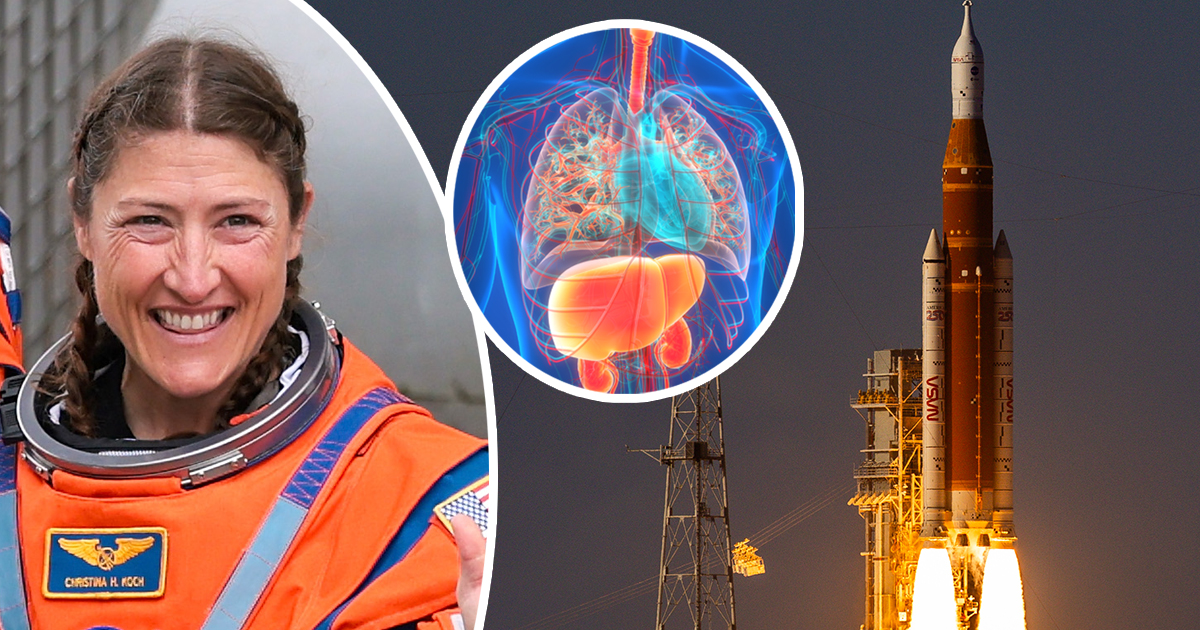
The Artemis II has launched into space. While there may be technical issues, the human body will also be affected in the new environment. In fact, there are several shocking things space does to a body – and it’s nothing you’d want for yourself.
On April 1, Artemis II launched from Kennedy Space Center. The four astronauts onboard, Reid Wiseman, Victor Glover, and Christina Koch, along with Canadian Space Agency astronaut Jeremy Hansen, have begun their journey to the Moon, which is the first moon mission in 53 years. They will stay in space for 10 days, if everything goes well.
When astronauts leave Earth, they don’t just travel into space — they step into an environment that begins changing their bodies almost immediately. According to scientists, it doesn’t take long at all.
In fact, just five days in space can already trigger surprising effects inside the human body — from shifting fluids to weakening muscles — offering a glimpse into how extreme life beyond Earth really is.
Fluid shifts could cause “chicken legs” and “baby feet.” That is because fluids move upwards to the head. This can also lead to swelling and headaches.
One of the many things the astronauts will be exposed to is radiation. Speaking with the Daily Mail, Dr. Irene Di Giulio, at the Center for Human and Applied Physiological Sciences at King’s College in London, said the duration of the Artemis II mission decreases the long-term health risks compared to those who spend months on the International Space Station (ISS).
The shocking things 10 days in space does to the human body
Still, the radiation can trigger nausea.
“Space motion sickness could also be experienced as the body needs a few days to adapt. Meanwhile, acute fluid shift from the lower part of the body to the head may cause discomfort and swelling,” she said.
“Sleep disturbances due to a sudden change in the light–darkness cycle and the use of artificial lighting may be experienced. And mental stress and isolation, especially given the mission demands and living in an enclosed environment, may affect performance.”
As the human body doesn’t have to fight against gravity in space, many might find it very comfortable. However, it also causes a chain reaction in the body.
For example, fluids that normally stay in the lower body begin moving upward, often causing a puffy face and pressure in the head. At the same time, muscles and bones begin to weaken because they’re no longer being used the same way. The change can begin within days..Even short trips can have an impact.
As many experience weight loss and muscle atrophy, because gravity isn’t there to “fight” anything, many astronauts feel much older when returning to Earth.
Bone and muscle loss
However, Dr. Di Giulio said, that is unlikely to happen to the Artemis II astronauts.
“The impact on muscles and bones seen in longer missions may be less apparent, because they typically require a longer exposure to altered gravity,’ the expert explained.
“However, bone loss and muscle deconditioning can begin within just a few days, as demonstrated during NASA Space Shuttle missions, which were often seven to 14 days in duration. These effects therefore remain relevant for Artemis II and highlight the importance of performing in–flight exercise to counter the loss in bone and muscle.”
While many people assume only long missions are dangerous, research shows that even short stays in space can affect the body. From balance issues to changes in blood flow, astronauts often experience symptoms that can feel disorienting at first.
Susan Bailey, professor of radiation cancer biology at Colorado State University, stated that the longer an astronaut is in space, the more complex their transition to Earth will be.
Chris Mason, a professor of genomics at Cornell University, told Discover Magazine, “It’s all very disorienting when you first get up into space, and that disorientation can last anywhere from days to sometimes weeks.”
Would you want to go to space? Please share your thoughts in the comment section.
- READ MORE
- Artemis II astronauts made grim discovery moments after lift off on first moon mission in 50 years
- Artemis II mission could still be all over tonight despite historic liftoff – here’s why


