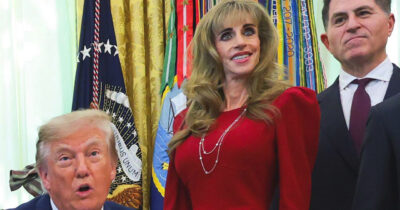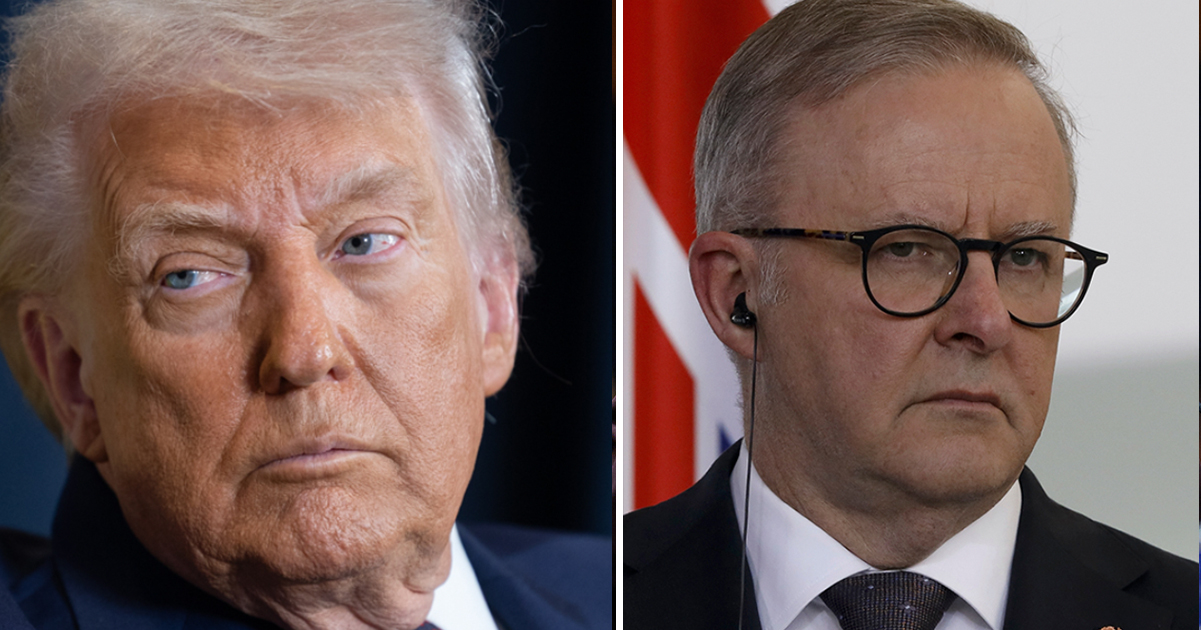
Australia’s Prime Minister delivered a hard message to Donald Trump after the U.S. president vowed on April 1 to bomb Iran “back to the Stone Ages” — despite claiming the country has already been “beaten and completely decimated.”
Tensions around the world intensified after Donald Trump signaled that the war against Iran could continue for weeks, leaving global leaders scrambling to interpret what the next phase of the conflict might look like.
‘Going to hit them extremely hard’
In a prime-time national address on April 1, U.S. President Donald Trump told Americans that victory was within reach but warned that further military pressure would be applied to ensure the outcome he has promised.
“We are on track to complete all of America’s military objectives shortly, very shortly,” Trump said. “We are going to hit them extremely hard over the next two to three weeks. We’re going to bring them back to the stone ages where they belong.”
“These core strategic objectives are nearing completion. Their ability to launch missiles and drones is dramatically curtailed, and their weapons, factories, and rocket launchers are being blown to pieces. Very few of them left,” he continued.
Ripple effects
The speech followed weeks of escalating conflict that has already dramatically reshaped geopolitical dynamics across the Middle East.
The attack led to the assassination of Iran’s Supreme Leader Ali Khamenei, prompting swift retaliation from Iran, which launched missile strikes targeting countries hosting U.S. military bases, including Qatar, Kuwait and the United Arab Emirates.
The ripple effects of the conflict have reached far beyond the region, as governments and businesses brace for prolonged instability tied to disruptions in one of the world’s most critical energy corridors.
Strait of Hormuz disruption rattles economies
The Strait of Hormuz, a narrow but vital waterway through which roughly one-fifth of the world’s oil and natural gas supply flows, has been partially closed as a result of the escalating conflict.
The blockade has caused energy prices to surge and sent shockwaves through stock markets, as investors and policymakers attempt to assess how long the disruption may last and how deeply it could impact global supply chains.
Despite mounting concern internationally, Trump downplayed the significance of the waterway to the United States, signaling that Washington believes it can withstand the pressure even as other nations face rising costs.
“We don’t need it. We haven’t needed it, and we don’t need it. We’ve beaten and completely decimated Iran. They are decimated both militarily and economically and every other way,” he said in the televised address.
‘Buy oil from the United States’
He framed the situation as evidence of U.S. strength, arguing other nations should reconsider their dependence on the region for energy supplies.
“So, to those countries that can’t get fuel, many of which refuse to get involved in the decapitation of Iran, we had to do it ourselves. I have a suggestion. Number one, buy oil from the United States of America. We have plenty. We have so much. And number two, build up some delayed courage. Should have done it before, should have done it with us as we asked,” he added.
Oil prices climbed sharply on April 2 in the hours following Trump’s remarks, underscoring the sensitivity of global markets to signals about the future of the conflict.
Allies assess impact
The evolving situation has placed pressure on allied governments to clarify their positions and assess how the conflict could further affect domestic economies.
“Australia is not an active participant in this war. But all Australians are paying higher prices because of it,” Australian Prime Minister Anthony Albanese said during a speech at the National Press Club in Canberra on April 2, per the BBC.
Albanese explained the country supported the original goal of stopping Iran from developing nuclear weapons but questioned why military action should continue now that those objectives appear largely met.
“We did express support for the original objectives: preventing Iran from ever obtaining a nuclear weapon, and degrading its capacity to endanger its neighbors,” the Aussie PM said.
“And now those objectives have been realized, it is not clear what more needs to be achieved – or what the endpoint looks like.”
‘Want to see a de-escalation’
Albanese emphasized that although Australia remains a close ally of the United States, it is not directly involved in the conflict, despite contributing support through the deployment of an electronic surveillance aircraft to assist the United Arab Emirates in its defense efforts.
“What I have said very clearly, though, is that I do want to see a de-escalation, and I want there to be recognition as well as greater clarity about how this ends,” Albanese added.
Do you believe the conflict should continue, or is it time for de-escalation? Share your thoughts in the comments and pass this story along so we can hear what others have to say!
READ MORE
- Barron Trump branded “more spoiled than a princess” as Americans want to send him to Iran war
- Australia’s PM issues scathing three-word warning to Trump over Iran war